By using the latest innovative technology, PAM Health’s wound care teams improve outcomes for patients with complex, non-healing wounds. One especially promising option that has been yielding exciting results in wound healing is fish skin graft (FSG) technology.
Biologics in Wound Care
Fish skin grafts are among a range of biologic products on the market for wound care. Since the first biologic wound healing technologies were developed in the early twentieth century[1], biologics have filled an important role in the wound healing process for patients who are good candidates. Derived from organic tissues, biologic agents have been shown to promote and accelerate cell regeneration and support the reconstruction of skin tissues.
Kerecis Fish Skin Grafts
PAM Health wound care teams use bioengineered skin substitutes and other specialized wound care products, including fish skin grafts from Kerecis. Typically available on an outpatient basis (although inpatient use may be approved on a case-by-case basis), Kerecis is a skin substitute derived from wild, sustainably harvested North Atlantic cod. “Cod fish skin is utilized because there is no known risk of viral transmission between cold-water cod fish and humans,” says Courtney Flores, Senior Outpatient Wound Care Program Director at PAM Health Warm Springs Rehabilitation Hospital of San Antonio. Similar in structure to human skin, fish skin is rich in specific omega-3 fatty acids associated with anti-microbial and anti-inflammatory properties. Because of this makeup, studies[2] have shown that FSGs can lead to decreased risk of infection and potentially faster wound healing due to the way it interacts with human tissue.
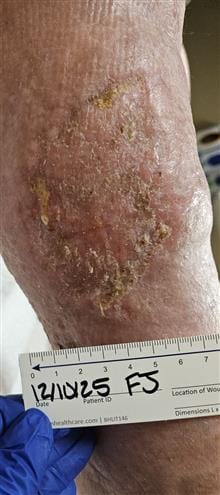
FSGs like Kerecis work well with other wound treatments and for a range of wound types, Flores says, from diabetic foot ulcers to complex burn wounds. Depending on the patient, PAM Health’s wound care professionals may utilize FSGs along with wound VACs, hyperbaric oxygen therapy, or other wound therapies to complement healing versus using just those treatments alone.
How Are Fish Skin Grafts Placed on Wounds?
Treatment with Kerecis grafts starts when a patient has a chronic wound that has not progressed with standard treatment for 30 days and meets medical necessity criteria, Flores says. That criteria can include venous leg ulcers, diabetic foot ulcers, surgical wounds, and chronic traumatic wounds from an accident, such as burns or lacerations.
Prior to installation of the fish skin graft, the patient – usually in an outpatient setting – undergoes a bedside debridement to prep the wound, Flores says. The Kerecis graft is then affixed in the wound bed with a non-adherent contact layer and a secondary absorbent dressing that are typically changed weekly. The FSG remains in the wound bed until it is completely absorbed, which usually takes about 5-7 days according to the Kerecis website. This key differentiator from other wound treatments eliminates the need for painful primary dressing changes or removal/re-application of devices like wound VACs.[3]
Innovation in Action at PAM Health Wound Care Centers
PAM Health wound care centers have been using Kerecis grafts since 2022 and have a close professional working relationship with the Kerecis team, including the clinical application of their products, Flores adds. “Kerecis representatives come to train our entire team and assist with the application of the product at the bedside…[They] routinely in-service employees to keep staff trained and up-to-date,” she says.
Beyond fish skin grafts, PAM Health’s specialized wound treatment programs optimize healing with treatment options tailored to each patient’s unique needs. Fish skin grafts, hyperbaric medicine, wound VACs, and traditional dressings are all excellent options our multidisciplinary team may use together to optimize wound healing and prevent amputation, in some cases, Flores says. By using innovative wound care technologies to promote healing, reduce infection, and relieve pain, PAM Health helps patients get back living their fullest lives, uninhibited by chronic wounds. Learn more about how our comprehensive wound care transforms lives here.
Reviewed by:
Dr. Arundathi Rao, MD, FACS, CWS-P
Dr. George Zlupko, MD, FCCP, Chief Medical Officer, PAM Health
[1] Parham, M. J., Grush, A. E., Smerica, A., Wen, Y. E., Depani, M., Ferry, A. M., Jones, L. M., & Thornton, J. F. (2022). Overview of biologic agents used in skin and soft tissue reconstruction. Seminars in Plastic Surgery, 36(01), 003–007. https://doi.org/10.1055/s-0042-1742736
[2] Ibrahim, M., Ayyoubi, H. S., Alkhairi, L. A., Tabbaa, H., Elkins, I., & Narvel, R. (2023). Fish skin grafts versus alternative wound dressings in Wound care: A Systematic Review of the literature. Cureus, 15(3), e36348. https://doi.org/10.7759/cureus.36348
[3] Patients and Caregivers – KeRECiS. (2025, November 21). Intact Fish Skin for Tissue Regeneration | Kerecis. https://www.kerecis.com/patients-and-caregivers/